How to Keep Dog Beds From Flattening (7 Fixes)
Table of Contents
Last Updated: November 17, 2026
If your dog's bed looks like a pancake, you're not alone. Most dog owners notice flattening within a few months, and the cause is usually simple: the filling gets compressed under weight every single day. Pawfect Supplies has put together this guide to help you learn how to keep dog beds from flattening and get more life out of the bed you already own.
Flattening happens when the filling loses its ability to spring back. Foam breaks down, fiber clumps, and the bed bottoms out under your dog's weight. Once that happens, your dog's joints and hips take the pressure instead of the cushion.
Here's what drives the problem:
- Constant pressure in one spot: Dogs tend to sleep in the same corner or curl up in the same position.
- Heavy weight: Large breeds compress filling faster than small dogs do.
- Low-quality fill: Thin or loose filling packs down quickly.
- Moisture and dirt: Damp filling loses its bounce and can clump.
A common mistake is assuming the bed is worn out when it's really just compressed.
Watch out: Don't put a flattened bed straight into a hot dryer. High heat can melt synthetic fill and make the problem worse.
How to Keep Dog Beds from Flattening: Your Maintenance Routine
Most flattening is preventable. A simple routine, done on a set schedule, does more than any single fix.
| Task | How Often | What It Prevents |
|---|---|---|
| Rotate and redistribute filling | Weekly | Permanent dips in one spot |
| Air out and fluff | Monthly | Packed, damp filling |
| Spot-clean or wash cover | Every 2-4 weeks | Dirt and moisture buildup |
| Check for lumps or bottoming out | Monthly | Loss of support |
Rotate and Redistribute Weekly
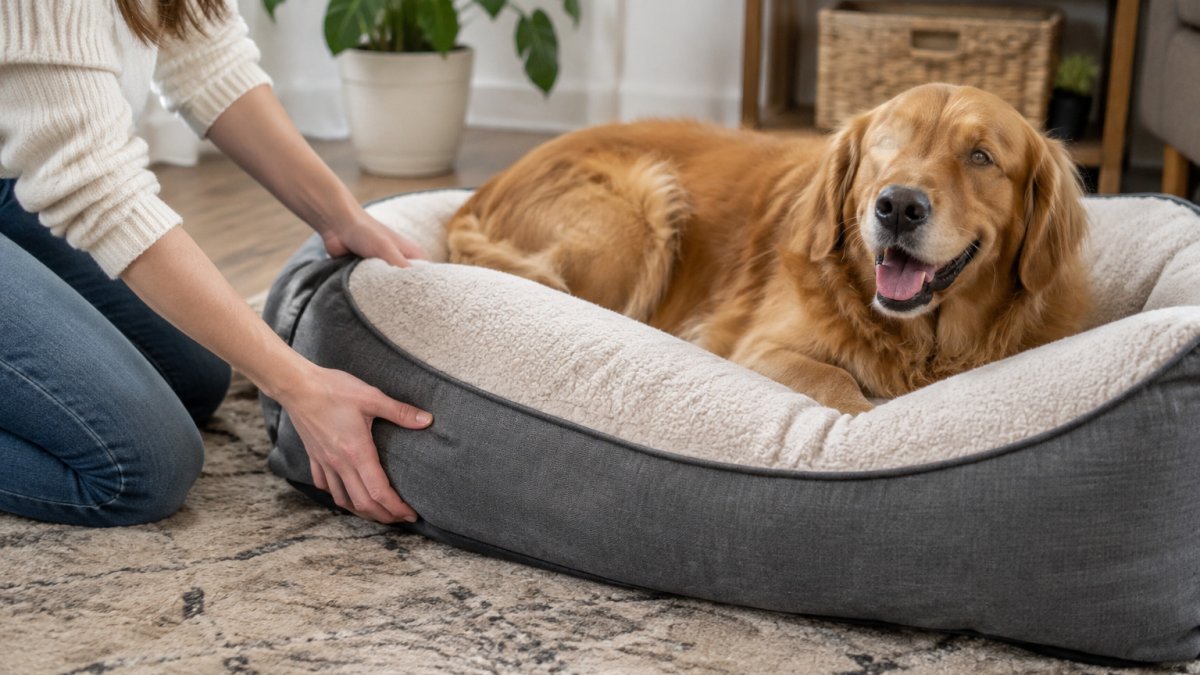
Turn the bed around once a week so your dog lands on a different section. Then press down on the center and sides to spread the filling evenly. This is the fastest way to stop a permanent dip from forming.
Air Out and Fluff Monthly
Take the bed outside on a dry day, or set it near an open window. Fluff the cushion by hand, pulling the fill apart so it regains loft. Clean, dry air removes trapped moisture, which is one of the biggest causes of clumping.
How to Fluff a Dog Bed That Has Already Gone Flat
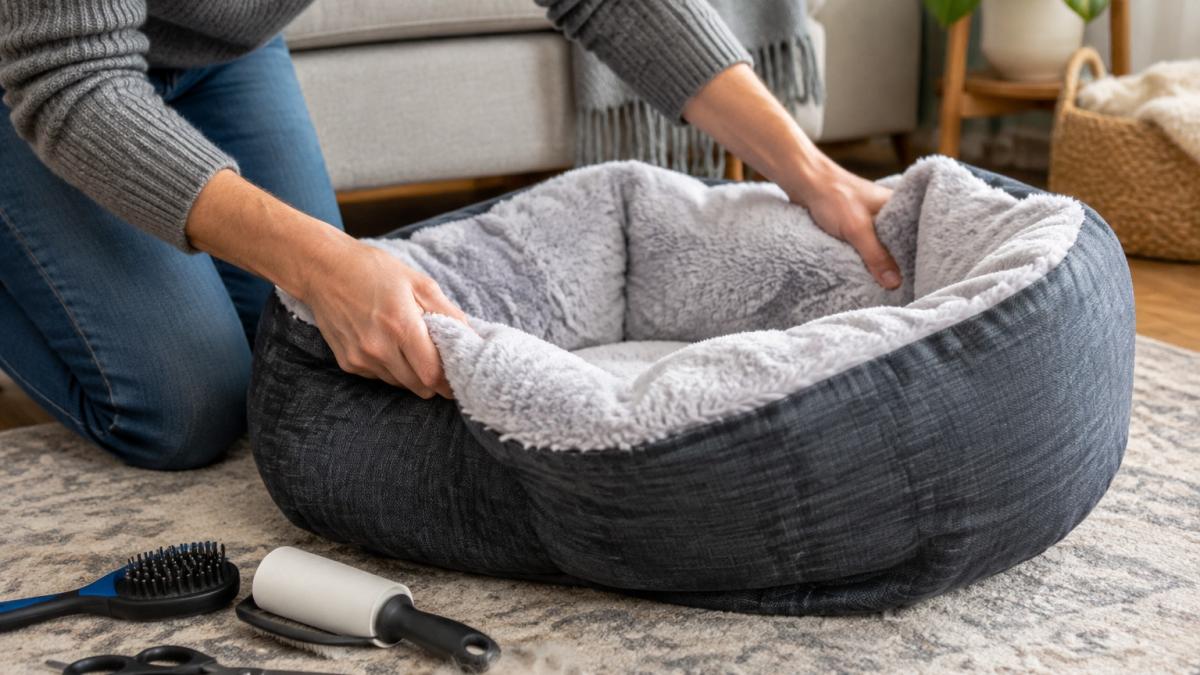
If the bed has already flattened, you may be able to recover some of its loft. Start by removing the cover and pulling out the filling. Shake or hand-separate clumps, then spread the fill across the inner shell.
Put the filling back in layers, not all in one spot. Press the edges firmly to set the shape, then let it rest for a day. Repeat the fluffing process every few days for the first week. A heavily broken-down bed may not fully recover.
How to Assess Support at Home in Five Minutes
You don't need special tools to check whether a bed still supports your dog. Lay your hand flat on the surface and press down firmly. If you feel the hard floor or base within a couple of inches, the bed has lost its support. Watch your dog's posture too. A dog that shifts around, looks uncomfortable, or sleeps on the floor nearby is telling you something.
Matching Bed Construction to Your Dog's Size and Weight
The right bed depends on how much your dog weighs and how he sleeps. Large dogs need thicker, denser fill and a sturdier base. Small dogs can do fine with lighter, softer construction. Check the weight range on the label before you buy, and choose a bed rated for your dog's size, not just one that fits the floor space.
Look for beds with a reinforced center. The center takes the most pressure, so it's the first spot to fail. A bed that holds its shape under your dog's weight will stay supportive much longer.
Material-Specific Care: Fiber Fill, Shredded Foam and Solid Foam
Each filling type behaves differently, so care should match the material.
- Fiber fill: Fluff often and rotate weekly. It clumps when damp, so dry it fully after washing.
- Shredded foam: Redistribute the pieces by hand. Shredded foam can shift and pack down in one area.
- Solid foam: Rotate and air it out. Avoid heavy wet cleaning, which can break down the foam over time.
Matching care to the filling type makes a noticeable difference in how long a bed holds its shape.
When to Replace a Dog Bed Instead of Repairing It
Repair works when the bed still has good structure and the filling is simply compressed. Replace it when the foam is crumbling, the fill has gone permanently lumpy, the cover is torn, or the bed no longer holds shape after a full week of fluffing and rotating.
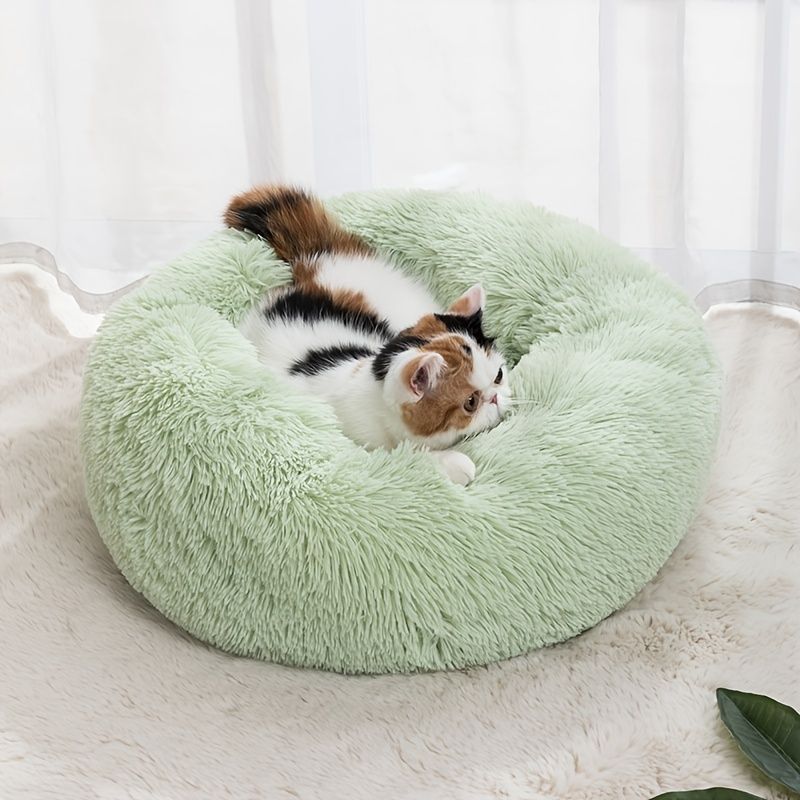
If you're ready for a new bed, the Pet Life 'Nestler' High-Grade Plush and Soft Rounded Dog Bed ($39.00) is a plush option with high-grade inner polyfill. You can also browse the store's plush dog bed options to compare styles. For a sturdier choice, the DGS Pet Products Repelz-It Upholstery Chenille Lounger Pet Bed ($111.08) uses a center pillow filled with high-density siliconized polyfill to resist flattening.
Our next step for your dog's comfort: Start rotating and fluffing this week, and set a monthly reminder so the routine sticks. Browse the Pawfect Supplies dog bed collection to find a bed that holds its shape for the long haul.
Frequently Asked Questions
Why do dog beds flatten over time?
Dog beds flatten because the filling compresses under repeated weight and loses its ability to spring back. Fiber fill clumps, shredded foam breaks down, and solid foam softens with constant pressure in the same spots. Rotating the bed, redistributing the filling, and choosing a higher-density core all slow this process. Once the center has bottomed out and no longer rebounds when pressed, the bed has lost its support and usually needs repair or replacement.
Can you add more stuffing to a dog bed?
Yes, you can add filling to many fiber-filled beds, but only with matching material. Pull out a small amount of polyester fiber fill, fluff it apart by hand, and work it into the flattened area through the opening in the cover. Avoid overstuffing, because that can stress the seams and make the bed lumpy. If the bed uses foam, adding loose fill will not restore it; a new foam insert is the better fix.
How often should I rotate or fluff my dog's bed?
Rotate and fluff the bed about once a week in homes where the dog sleeps on it daily. Turn it 180 degrees so the heavier-used side faces the other direction, then press down on the center and sides to redistribute the filling. Air the bed out monthly, and wash the cover according to the label. Consistent weekly care tends to prevent the deep center dip that makes beds feel flat.
When should I replace a flattened dog bed?
Replace the bed when the center stays compressed after fluffing, when the bed no longer rebounds, or when you can feel the floor through the cushion. Other warning signs include a sagging, lumpy surface, a bed that slides or bunches, and visible tears in the filling. For large dogs, a bed that bottoms out can leave joints unsupported, so replacement is often the safer choice than repeated patching.