The Essential Dog Health Wellness Checklist for Every Owner
Last Updated: November 12, 2026
Quick Summary
An essential dog health wellness checklist combines a yearly veterinary wellness exam with preventive screening, core vaccines and boosters, year-round parasite prevention, dental care, measured nutrition, and life-stage exercise. At home, track appetite, energy, thirst, stool, and mobility against your dog's baseline, and contact your vet promptly when a change persists.
- Schedule at least one comprehensive wellness exam per year for healthy adult dogs, and every 6 months for many seniors.
- Preventive screening typically includes a complete blood count, chemistry panel, urinalysis, and a fecal test.
- Brush your dog's teeth several times per week with dog-specific toothpaste, never human toothpaste.
- Weigh your dog monthly and log the number alongside a body condition score.
- Contact your vet promptly for appetite loss lasting more than 24 hours or limping that doesn't resolve with rest.
Table of Contents
- Why a Dog Health Wellness Checklist Beats Reactive Care
- The Annual Veterinary Wellness Exam and Preventive Screening
- Your Dog Vaccination Schedule, Boosters, and Core Vaccines
- Parasite Prevention: Flea, Tick, Heartworm, and Deworming
- Dental Health, Oral Care, and Tooth Brushing Routines
- Nutrition, Portion Control, and Healthy Weight Monitoring
- Exercise, Daily Activity, and Joint Health by Life Stage
- Dog Health Signs to Monitor at Home Between Vet Visits
- Building a Daily Dog Care Routine and Monthly Task List
- Using a Dog Wellness Tracker to Catch Problems Early
- Frequently Asked Questions
Why a Dog Health Wellness Checklist Beats Reactive Care
The American pet market is projected to reach $159.1 billion in 2026, with growth slowing to 2.3%, according to Packaged Facts market research. That slowdown puts a premium on prevention: an essential dog health wellness checklist costs far less than treating a condition you could have caught early. Reactive care means waiting for symptoms. Preventive care means tracking baseline data, scheduling screenings, and catching changes while they're still cheap to fix.
Below, we'll show you exactly how to build a checklist that covers daily, monthly, and yearly tasks, and how to use it to spot problems before they become emergencies. But first, here's what most guides get wrong: they list tasks without telling you what "normal" looks like for your specific dog.
The Annual Veterinary Wellness Exam and Preventive Screening
At minimum, schedule one comprehensive wellness exam per year for healthy adult dogs. Puppies need visits every 3 to 4 weeks through their vaccine series, and senior dogs, generally those in the last quarter of their expected lifespan, which varies by breed and size, often benefit from exams every 6 months.
Preventive screening typically includes a complete blood count, a chemistry panel, urinalysis, and a fecal test. Many veterinarians also recommend heartworm testing annually, and tick-borne disease screening in higher-risk regions. For senior dogs, add thyroid testing and blood pressure measurement where indicated. Ask your vet to record every value in a shared document you can access, and request the reference ranges alongside your dog's results so you can see how far a value sits from normal, not just whether it was flagged.
What most guides miss is that the trend matters more than any single number: a value drifting upward over three visits tells you more than one flagged result. A creatinine that has climbed steadily across three annual panels, even while still inside the reference range, is a conversation worth having. Bring your at-home log to the appointment so the vet can correlate lab trends with appetite, water intake, weight, and activity changes.
Screening should be adjusted to the individual dog, not applied as a fixed menu. Breed predispositions matter: large and giant breeds warrant earlier and more frequent attention to joint and cardiac screening, while certain breeds have known risks for specific conditions your vet can target. Body size affects dosing, anesthesia risk, and the age at which a dog is considered senior. Lifestyle matters too, a dog who hikes in tick country, attends daycare, or travels has different exposure risks than a dog who stays home.
Keep a simple record of each exam: date, weight, body condition score, vaccines given, tests run, and the vet's notes. That record becomes the baseline every future visit is measured against, and it's the first thing a new veterinarian will ask for if you move or switch practices.
Your Dog Vaccination Schedule, Boosters, and Core Vaccines
Core vaccines for dogs typically include rabies, distemper, parvovirus, and adenovirus, with boosters timed according to your vet's protocol and local regulations. A dog vaccination schedule is not one-size-fits-all: puppies follow a series, adults follow booster intervals, and senior dogs may need adjustments based on health status.
Keep a written vaccine schedule with dates and product names. When you switch vets or travel, that record is the first thing anyone asks for. Watch out: skipping a booster because your dog "never goes anywhere" leaves a gap that a single exposure can exploit, and boarding facilities will turn you away without current documentation.
Parasite Prevention: Flea, Tick, Heartworm, and Deworming
Year-round parasite prevention is the standard in most regions, covering flea and tick prevention, heartworm medication, and periodic deworming. Heartworm is transmitted by mosquitoes, so indoor dogs are not exempt (Heartworm in Dogs).
Set a monthly reminder for preventives and log each dose. Adherence is where most owners slip: a missed month creates a real gap in protection. Fecal tests at your annual exam catch intestinal parasites that preventives may not cover. If you travel with your dog, check regional risk before you go, since tick pressure varies significantly by area.
Dental Health, Oral Care, and Tooth Brushing Routines
Dental disease is among the most common conditions vets find in adult dogs, and tooth brushing is the most effective home intervention. Aim for brushing several times per week with dog-specific toothpaste. Never use human toothpaste.
Build the habit slowly: start with a finger brush and a taste of the paste, then graduate to a soft-bristled dog toothbrush. Oral health checks belong in your monthly routine, looking for bad breath, tartar buildup, red gums, or loose teeth. Your vet can show you the gum line to inspect. Professional cleanings under anesthesia are a separate decision your vet should guide based on examination findings.
Nutrition, Portion Control, and Healthy Weight Monitoring
Feed an age-appropriate food in measured portions, and adjust as your dog moves through life stages. Portion control is the single most controllable factor in healthy weight, and healthy weight is one of the strongest predictors of long-term mobility and quality of life.
Weigh your dog monthly and record it. Use a body condition score alongside the scale: you should feel ribs easily without seeing them, and see a waist from above. A smart feeder with app-controlled portions, like the Smart Wi-Fi Pet Feeder with Camera for Remote Feeding, makes consistent portion control easier and lets you monitor intake remotely. Watch out: free-feeding makes weight monitoring nearly impossible, because you can't measure what you can't see.

Exercise, Daily Activity, and Joint Health by Life Stage
Exercise needs shift with age, breed, and size. Puppies need short, frequent activity and should avoid repetitive high-impact exercise while growing. Adult dogs generally need daily activity matched to their breed's energy profile. Seniors benefit from gentle, consistent movement that maintains mobility and joint health.
Joint health deserves attention earlier than most owners think, particularly in large breeds and dogs with a family history of joint issues. If your dog is aging, our vet-informed guide to supplements for aging dogs covers what to look for. Keep a stash of durable toys that support daily play so activity stays easy to fit in, even on busy days.
Dog Health Signs to Monitor at Home Between Vet Visits
The dog health signs to monitor at home are appetite, energy level, thirst, hydration, stool quality, urine output, skin and coat condition, mobility, and mood. These are your early-warning system, and they only work if you know your dog's baseline. Most guides tell you to watch for changes without telling you what to measure or when a change is serious enough to act on. Here is a practical way to close that gap.
Set a baseline in the first week by recording each sign daily for seven days. For appetite, note whether meals are finished and roughly how quickly. For water, measure how much you refill the bowl each day, a marked container or a fountain with a visible reservoir makes this easy. For stool, note consistency on a simple scale from firm to loose and record any color change. For energy, note the length and intensity of daily activity and whether your dog initiates play. For mobility, watch for stiffness after rest, reluctance on stairs, or a shortened stride. For mood, note greeting behavior and response to familiar cues. Write these down; memory is unreliable and a week of notes becomes your reference point.
Once you have a baseline, log the same signs two or three times a week and review the log monthly. The goal is to catch drift, not to obsess over single days. A dog who normally finishes every meal and suddenly leaves half for two days is a signal. A dog whose water intake doubles and stays elevated is a signal. A dog who stops greeting you at the door, or who hesitates on the stairs they used to take easily, is telling you something.
Escalation should be tiered. Contact your veterinarian promptly for: appetite loss lasting more than 24 hours, a sudden increase in thirst or urination that persists beyond a day or two, vomiting or diarrhea that recurs or lasts more than a day, new lumps, limping that doesn't resolve with rest, or a noticeable drop in energy or interaction. Seek emergency care immediately for: difficulty breathing, collapse, pale or white gums, uncontrolled bleeding, suspected toxin ingestion, a distended abdomen with retching, seizures, or inability to urinate. When in doubt, call your vet's office and describe what you're seeing, most practices will tell you whether to come in, monitor, or go to an emergency clinic.
A filtered fountain can make water more appealing to drink. The Smart Pet Water Fountain with Filtration for Healthy Hydration offers a 1.5L reservoir and filtration; it keeps water flowing so you can keep fresh water available. Pair it with a written log, and you'll have both the data and the trigger points to act on it.

Building a Daily Dog Care Routine and Monthly Task List
A daily dog care routine should take minutes, not hours, and cover the basics that keep preventive care on track. Structure beats motivation: a written routine you follow consistently catches more problems than an ambitious plan you abandon.
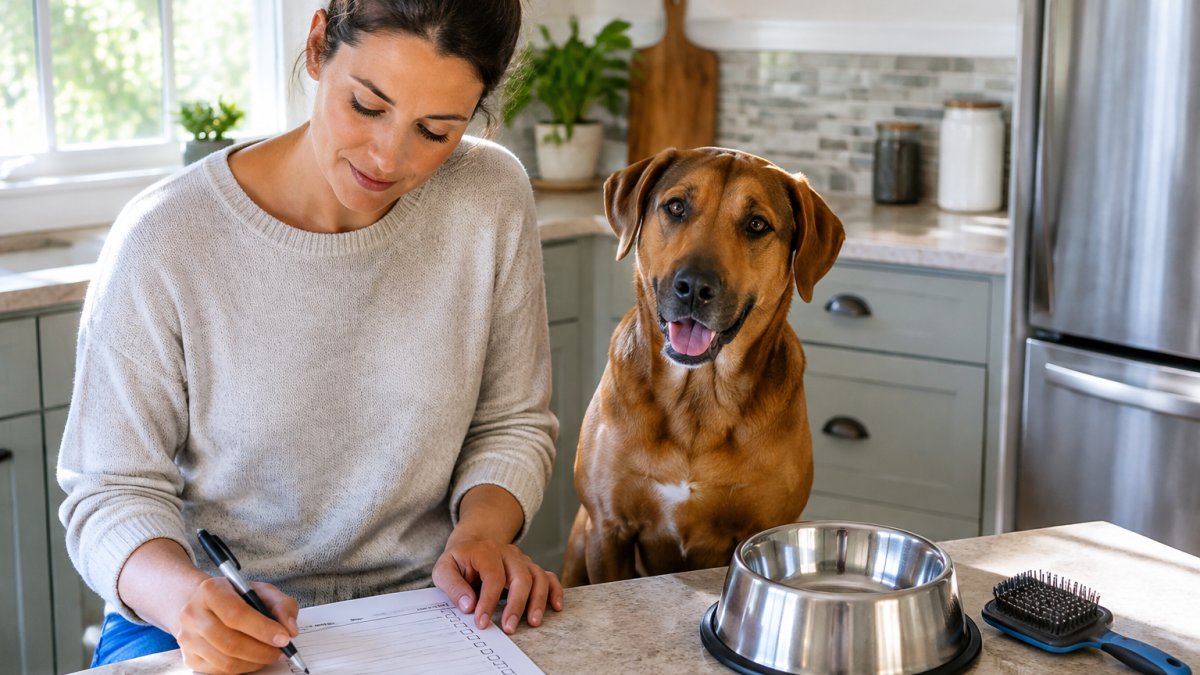
Here is the routine we recommend:
Daily tasks
- Fresh water and a quick hydration check
- Measured meals at consistent times
- Exercise and play appropriate to life stage
- Coat and skin glance: new lumps, scratches, or irritation
- Behavior and mood check against baseline
- Grooming with a brush or grooming gloves to control shedding
Monthly tasks
- Weigh your dog and log the number
- Administer parasite preventives on schedule
- Body condition score check
- Dental inspection: gums, breath, tartar
- Nail trim and ear check
- Review your wellness tracker for any drift
Yearly tasks
- Wellness exam and preventive screening
- Vaccination and booster review
- Dental cleaning assessment with your vet
- Full health history review and plan update
The Pet Grooming Gloves make the daily coat check quick enough that you'll actually do it, which is the whole point.

Here is the routine we recommend, broken into daily, monthly, and yearly tasks.
| Frequency | Task |
|---|---|
| Daily | Fresh water and a quick hydration check |
| Daily | Measured meals at consistent times |
| Daily | Exercise and play appropriate to life stage |
| Daily | Coat and skin glance: new lumps, scratches, or irritation |
| Daily | Behavior and mood check against baseline |
| Monthly | Weigh your dog and log the number |
| Monthly | Administer parasite preventives on schedule |
| Yearly | Wellness exam and preventive screening |
Using a Dog Wellness Tracker to Catch Problems Early
A dog wellness tracker is a simple log of weight, appetite, energy, hydration, stool quality, and medication doses, reviewed on a fixed schedule. It doesn't need to be an app. A notebook or spreadsheet works, as long as you record consistently and review it monthly.
Research published in the journal Animals on the dog-owner relationship and owner mental health examined how the strength of that bond relates to owner wellbeing, which underlines how closely owners already watch their dogs. A tracker turns that attention into data. What most guides miss is the review step: logging without reviewing is just record-keeping. Set a monthly appointment with yourself to look for trends, then bring the log to your vet visit.
Preventive care only works when the daily habits hold up, and that's where most owners need support. Pawfect Supplies curates premium, USA-made wellness essentials designed to make the daily and monthly tasks on this checklist easier to keep: thoughtfully selected products for every stage of a dog's life, free shipping on orders over $50, and gear built for comfort and care. Get started with Pawfect Supplies and build a routine your dog benefits from every single day.
Frequently Asked Questions
What should be included in a dog health wellness checklist?
A complete dog health wellness checklist covers annual veterinary exams, a current dog vaccination schedule with boosters, year-round parasite prevention for fleas, ticks, heartworm, and worms, dental care and tooth brushing, age-appropriate nutrition with portion control, healthy weight monitoring, daily exercise, and behavior tracking. Add at-home checks for skin, coat, ears, eyes, and hydration, plus a dog wellness tracker to log changes between visits. The checklist works best when split into daily, monthly, and yearly tasks so nothing slips.
How often should a healthy dog visit the veterinarian?
Most healthy adult dogs need at least one comprehensive wellness exam per year, . Puppies and kittens need visits every 3 to 4 weeks during their first few months to complete vaccine series and monitor growth. Senior dogs and dogs with chronic conditions often benefit from exams every six months. Your vet may adjust the schedule based on breed, size, and individual risk factors.
Which vaccines does a dog need, and how often?
Core vaccines for dogs typically include rabies, distemper, parvovirus, and adenovirus, with boosters following the schedule your veterinarian sets. Puppies receive a series of shots every 3 to 4 weeks until about 16 weeks of age, then boosters at one year. Adult dogs usually need core boosters every one to three years depending on the vaccine and local rules. Non-core vaccines like Bordetella or leptospirosis depend on lifestyle and risk. Keep a written dog vaccination schedule and bring it to every visit.
What dog health signs should I monitor at home?
Watch appetite, water intake, energy level, mood, stool quality, urine habits, breathing, mobility, skin and coat condition, and oral health. Note any vomiting, diarrhea, coughing, limping, head shaking, or unusual scratching. Weigh your dog monthly and check body condition by feeling the ribs. Establish a baseline for each sign so you can spot changes early. Sudden lethargy, refusal to eat for more than 24 hours, difficulty breathing, or repeated vomiting warrant a call to your veterinarian right away.
How much exercise does a dog need each day?
Exercise needs vary by breed, age, and size. Most healthy adult dogs benefit from 30 to 60 minutes of daily activity, split into walks and play sessions. High-energy breeds and working dogs may need 90 minutes or more, while senior dogs and flat-faced breeds often do well with shorter, gentler sessions. Puppies need frequent short bursts rather than long runs to protect growing joints. Adjust intensity in heat and watch for signs of fatigue or lameness.
What information should I track between veterinary visits?
A dog wellness tracker should log weight, body condition score, appetite, water intake, stool and urine habits, energy level, medication and preventive-care dates, vaccine due dates, dental brushing frequency, and any new symptoms with dates. Note grooming and nail trims, ear cleaning, and skin changes. Photos of lumps, rashes, or coat issues help your vet see progression. Bring the tracker to every exam so your veterinarian has a clear health history and can make better recommendations.
When should I call a veterinarian about a change in my dog's health?
Call your veterinarian if your dog stops eating for more than 24 hours, has repeated vomiting or diarrhea, shows difficulty breathing, collapses, strains to urinate, or has a seizure. Also reach out for persistent limping, sudden behavior changes, unexplained weight loss, new lumps, or excessive thirst. For puppies and senior dogs, act sooner because small changes can escalate quickly. When in doubt, a phone call costs little and can catch problems before they become emergencies.